RBI October 2026 policy: Rate hike signals and inflation risks
The October 2026 Macro Context: Why This MPC Meeting Matters
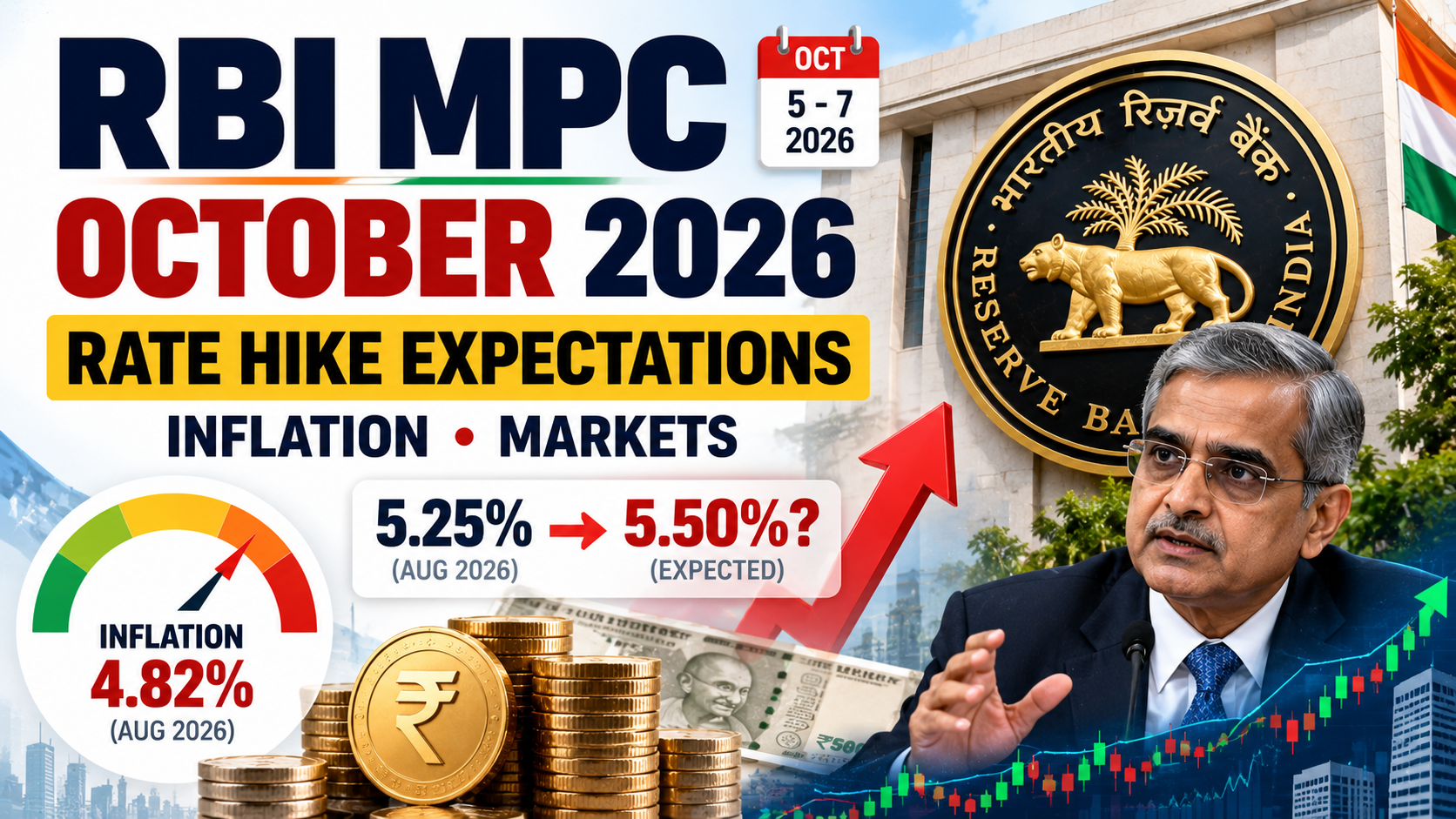
Big week ahead. The Reserve Bank of India's (RBI) Monetary Policy Committee (MPC) meets in early October 2026 with three headaches on the table: pinning down inflation, keeping GDP growth alive, and stopping the rupee from sliding.
Headline CPI inflation won't budge. It's stuck between 4.4% and 4.8%, blowing past the RBI's 4% target for months [[14]]. Food prices drove the mess, spiking to 5.95% while global commodity shocks kept piling on pressure [[19]].
Exam candidates get a live case study here. It's inflation targeting playing out in real time, testing whether the RBI holds its mandated 4% (+/- 2%) band under the amended RBI Act, 1934.
Decoding the Numbers: Inflation, Growth, and the Repo Rate Dilemma
The MPC leans on the repo rate. Mid-2026 forecasts pointed to tame inflation. Recent data killed that thesis [[17]]. Traders now price two distinct paths for October 2026.
- Scenario A (Hawkish Hold): RBI keeps the repo rate. It flips its stance from "neutral" to "withdrawal of accommodation," warning markets it'll hike if inflation stays hot.
- Scenario B (Preemptive Hike): A 25 basis points (bps) bump in the repo rate to lock down inflation expectations before they bleed into wage demands.
"Inflation above 4% for three quarters demands action. The central bank can't hesitate or risk losing credibility in its targeting framework.", Chief Economist, Leading Indian Financial Institution
India's FY27 GDP sits near 6.6%. Rate hikes could still choke private investment and consumer demand despite that resilient growth [[3]].
Market Impact: How a Hawkish RBI Ripples Through the Economy
Policy lags. Markets don't. An October 2026 rate hike or hawkish hold instantly reprices risk across three sectors:
| Market Segment | Immediate Impact | Underlying Mechanism |
|---|---|---|
| Bond Market | Yields climb. Prices drop. | Steeper repo rates make fresh paper attractive, dragging down valuations on older G-Secs with lower coupons. |
| Equity Market | Rate-sensitive stocks wobble | Costlier debt squeezes margins for auto and realty firms that can't pass expenses to buyers. |
| Forex (INR/USD) | Rupee steadies or gains | Tighter domestic yields pull in foreign portfolio cash, boosting rupee demand. |
Banking and SSC CGL exams often test this link between monetary policy and market behavior.
Multi-Dimensional Impact: Who Wins and Who Loses?
Policies split winners from losers. UPSC Mains GS-3 graders expect you to map those exact stakeholder fractures without flinching.
The Borrowers (Losers)
Floating-rate borrowers and MSMEs face steeper EMIs. That's less cash on hand. Rural and semi-urban consumption could stall as disposable income shrinks under tighter working capital credit costs.
The Savers and Fixed-Income Investors (Winners)
Savers win. Seniors and retail investors grab better FD returns as small savings schemes pay more. RBI keeps real rates positive, meaning nominal yields beat inflation to shield purchasing power from erosion.
The Government (Mixed)
A stable rupee tames oil imports. Yet higher rates spike borrowing costs. Without strict spending discipline, that debt burden could easily blow out the fiscal deficit.
Exam Relevance: UPSC, Banking & SSC Takeaways
Need this for exams? Memorize these facts.
- MPC Composition: Six members run the show. Three come from the RBI, including the Governor, while the Central Government picks three outsiders. Majority rules. Ties? The Governor breaks them.
- Inflation Target: India aims for 4% inflation with a 2% tolerance band either way. New Delhi set this mandate alongside the RBI through March 2026 and later extended it.
- Key Rates to Track: Watch the repo rate, reverse repo rate, Standing Deposit Facility (SDF), Marginal Standing Facility (MSF), plus the Cash Reserve Ratio (CRR).
- UPSC Mains Angle: Expect prompts like: "Critically examine the effectiveness of the inflation-targeting framework in India amidst global supply-side shocks."
Frequently Asked Questions (FAQs)
What is the primary objective of the RBI Monetary Policy in 2026?
Price stability comes first. The RBI Act, 1934 mandates holding CPI inflation at 4% while still considering growth needs.
How does a repo rate hike affect common citizens?
Banks pay more. They pass that cost to you. Home, car, and personal loan EMIs climb immediately when rates rise, shrinking the monthly cash families actually keep after bills are paid.
What is the difference between Repo Rate and Reverse Repo Rate?
Repo Rate tracks what RBI charges commercial banks for loans. Reverse Repo Rate? That's the flip side. RBI borrows cash from those same banks to mop up extra liquidity, though the SDF handles most of that work now.
Why is food inflation a challenge for the RBI?
Monsoons and supply chains drive food prices, not demand. Interest rates can't fix these shocks. It's a blunt tool. Raising them risks stalling growth while leaving the actual supply bottlenecks completely untouched by monetary policy.
Conclusion
October 2026 tests the RBI. The MPC might hike rates or just hold firm. Either way, price stability remains the non-negotiable foundation for sustainable growth. Aspirants tracking inflation prints against policy shifts aren't just cramming for exams. They're reading the actual machinery running India's markets. It's messy work. Rates jump, bonds sell off.
About the Author
School Principal at Khalsa Inter College, Naka Hindola, Lucknow, Uttar Pradesh. Committed to providing free, quality education for students preparing for competitive examinations.
Learn more about our mission →