25th India-China Border Talks: Doval in Beijing 2026 | Complete UPSC Analysis
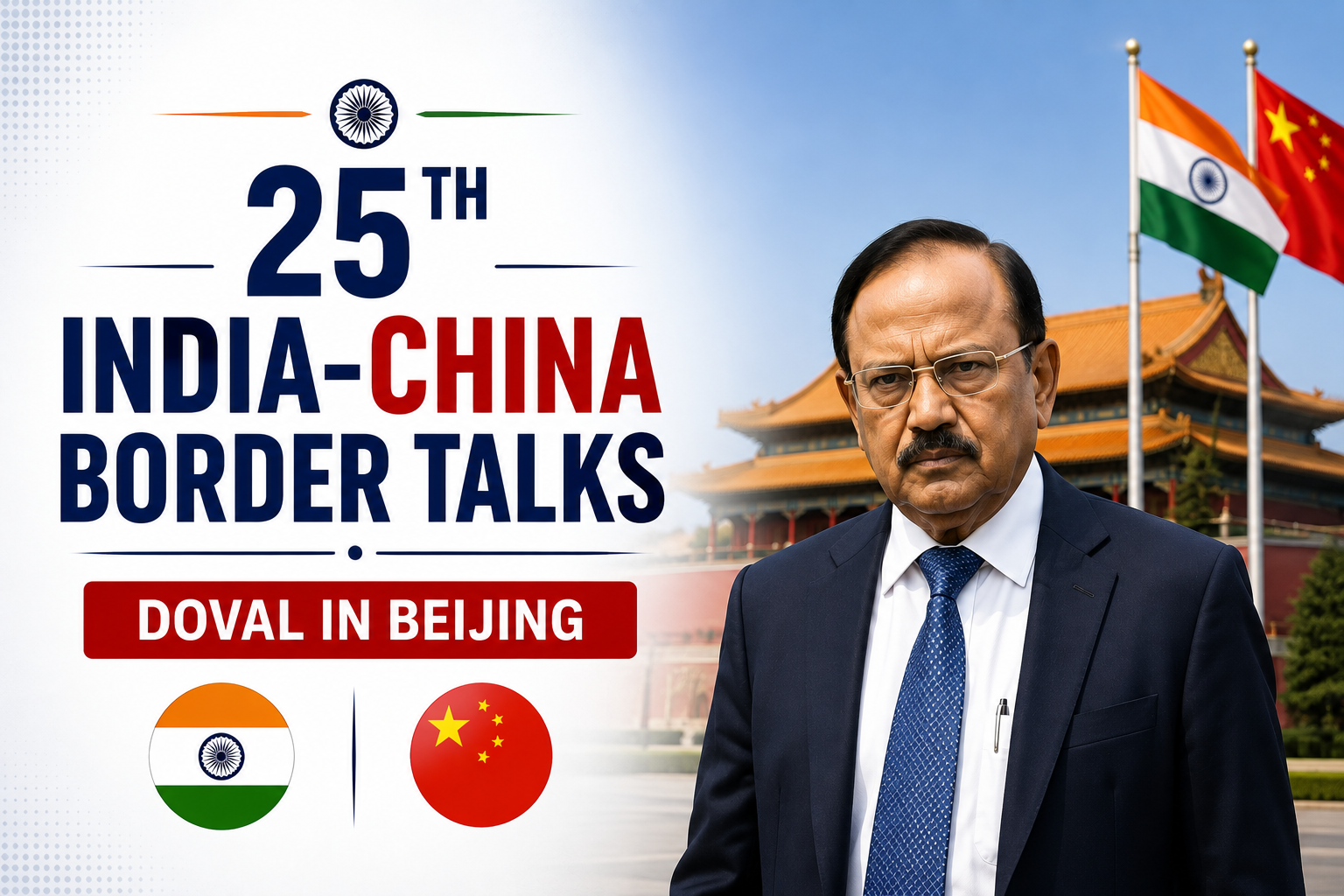
Table of Contents
- Background & Historical Context
- Core Explanation: The SR Mechanism
- Multi-Dimensional Impact Analysis
- Key Stakeholders & Positions
- Data, Statistics & Ground Reality
- Critical Analysis & Expert Perspective
- Challenges & Counterarguments
- India's Strategic Response & Future Roadmap
- Exam Preparation Strategy
- Key Takeaways
- Frequently Asked Questions
- Related Topics & Internal Linking
Background & Historical Context
When National Security Advisor Ajit Doval arrived in Beijing on August 24, 2026, it signaled more than just a routine diplomatic meeting [[1]]. It marked the culmination of a six-year strategic recalibration between Asia's two largest powers. To understand the 25th round of Special Representatives' (SR) talks, one must trace the trajectory of the India-China boundary dispute.
The modern friction point crystallized in 2020 following the Galwan Valley clash, which halted bilateral engagement and froze the border talks mechanism. For four years, the primary objective was purely tactical: military disengagement. This was achieved incrementally at Pangong Tso (2021), Gogra-Hot Springs (2022), and finally, the highly complex friction points of Depsang and Demchok in late 2024 [[24]].
The 2024 India-China Border Patrol Agreement restored patrolling rights in these critical sectors, creating the necessary political capital for the current phase [[25]]. The 25th round in 2026 transitions the dialogue from crisis management to boundary settlement. Both sides had previously agreed to hold this round in China, focusing on reopening traditional boundary trade markets and establishing long-term peace protocols along the Line of Actual Control (LAC) [[18]].
Core Explanation: What is the SR Mechanism?
The Special Representatives (SR) mechanism is a high-level diplomatic channel established in 2003 to find a political settlement to the India-China boundary question. Unlike military-level talks (WMCC), the SR talks operate at the strategic level, bypassing bureaucratic hurdles to address core political and territorial frameworks.
How the Mechanism Works:
- Appointment: Each nation designates a senior official as their SR. For India, this is the National Security Advisor (currently Ajit Doval). For China, it is the State Councilor or Foreign Minister (currently Wang Yi) [[11]].
- Agenda Setting: Topics are mutually agreed upon, focusing on political parameters, guiding principles, and confidence-building measures (CBMs).
- Execution: Talks are held alternately in New Delhi and Beijing. Outcomes are not always immediate agreements but often joint statements that set the tone for lower-level military and diplomatic engagements.
"The SR mechanism is not about drawing lines on a map today; it is about creating the political architecture that makes drawing those lines possible tomorrow."
Quick Fact Box: The 25th Round at a Glance
- Date: August 25, 2026
- Location: Beijing, China
- India's SR: NSA Ajit Doval
- China's SR: Foreign Minister Wang Yi
- Primary Agenda: Consolidating 2024 disengagement, reopening border trade markets, and discussing the final boundary framework.
Why This Matters: Multi-Dimensional Impact Analysis
The implications of the 25th India-China border talks extend far beyond the Himalayas. A nuanced understanding requires analyzing the impact across five critical dimensions.
1. Geopolitical Dimension
A stabilized LAC allows India to redirect strategic attention and resources toward the Indian Ocean Region (IOR) and its partnerships in the Quad. For China, resolving border friction reduces the risk of a two-front strategic dilemma amid its ongoing tensions in the South China Sea.
2. Economic Dimension
The agreed-upon reopening of three traditional boundary trade markets (Natula, Shipkila, and Lipulekh) will provide a vital economic lifeline to local border communities [[18]]. Furthermore, a thaw in relations could ease the regulatory bottlenecks currently stifling Chinese investments in Indian tech and manufacturing sectors.
3. Political Dimension
Domestically, the Indian government must balance the narrative of 'strategic resolve' with the pragmatic need for regional stability. Any perceived concession on territory will face intense scrutiny from opposition parties and civil society.
4. Security Dimension
While disengagement is complete, the de-induction of heavy weaponry and infrastructure remains a work in progress. The talks aim to establish stricter protocols to prevent accidental escalation, thereby reducing the defense budget burden of maintaining high-alert deployments.
5. Environmental Dimension
The Himalayan ecosystem is fragile. Reduced military footprint and coordinated management of trans-border rivers (like the Sutlej and Brahmaputra) are critical sub-texts of these diplomatic engagements [[26]].
Key Stakeholders & Their Positions
Great power diplomacy involves multiple actors with divergent interests. Mapping these stakeholders reveals the underlying tensions of the negotiation.
| Stakeholder | Stated Position | Underlying Interest |
|---|---|---|
| Government of India (MEA/NSA) | Peace and tranquility at the LAC is a prerequisite for normal relations. | Secure borders to focus on economic growth and counter Chinese influence in South Asia. |
| Chinese Foreign Ministry | Boundary issues should not define the entirety of India-China relations. | Prevent India from aligning too closely with the US-led containment architecture. |
| Indian Armed Forces | Verify disengagement on the ground before trusting diplomatic assurances. | Maintain tactical advantage and robust infrastructure in eastern Ladakh. |
| Ladakh Local Administration | Demand restoration of livelihoods and traditional trade routes. | Economic survival of border villages dependent on cross-LoC commerce. |
Data, Statistics & Ground Reality
Numbers provide the empirical backbone to diplomatic rhetoric. Understanding the scale of the India-China border dynamic requires contextualized data.
- Length of LAC: Approximately 3,488 km, divided into Western, Middle, and Eastern sectors.
- Disengagement Milestone: The 2024 agreement resolved friction at Depsang and Demchok, completing the disengagement process that began at Pangong Tso in 2021 [[23]].
- Trade Paradox: Despite border tensions, bilateral trade hovered around $136 billion in 2023-24, highlighting the deep economic interdependence that both nations are reluctant to sever completely.
- Infrastructure Gap: China has constructed over 1,000 km of roads and multiple airfields within 50 km of the LAC in the Tibetan Autonomous Region, compared to India's accelerated but still catching-up Border Roads Organisation (BRO) projects.
Visualization Note: A bar chart comparing military infrastructure density (roads/airfields per 100 sq km) on both sides of the LAC would powerfully illustrate the strategic asymmetry India is working to neutralize.
Critical Analysis & Expert Perspective
Beyond the headlines of 'thawing relations', the 25th round represents a high-stakes gamble. The transition from disengagement (pulling troops back from friction points) to de-escalation (reducing overall military presence) is historically the most treacherous phase of border diplomacy.
Expert analysts suggest that China's willingness to engage at the SR level is driven by its need to stabilize its periphery amid economic headwinds and Western decoupling pressures. For India, the leverage lies in its growing strategic indispensability to the West and its robust border infrastructure development.
"The 2024 disengagement was a tactical victory. The 2026 SR talks are a strategic test. If India can link border peace to broader economic and technological reciprocity, it will have redefined the rules of engagement with Beijing."
— Paraphrased from leading South Asian strategic policy analysts.
UPSC Mains Critical Questions Framed from this Analysis:
- "The India-China boundary dispute is no longer just a territorial issue, but a complex interplay of domestic politics and global geopolitics." Critically examine.
- How does the reopening of traditional border trade markets align with India's broader 'Neighborhood First' and border area development policies?
Challenges, Criticisms & Counterarguments
Balanced journalism requires acknowledging the severe headwinds facing this diplomatic initiative.
- The Trust Deficit: The 2020 Galwan clash shattered decades of border management protocols. Rebuilding institutional trust will take years, not a single meeting.
- Infrastructure Asymmetry: Critics argue that any agreement that freezes the status quo inherently favors China, given its head start in dual-use (civilian-military) infrastructure in Tibet.
- Domestic Political Constraints: In both nations, nationalist sentiment is high. Any compromise perceived as 'capitulation' will face fierce backlash, limiting the negotiating flexibility of both Doval and Wang Yi.
- The 'Salami Slicing' Fear: Indian strategic thinkers remain wary that China uses diplomatic talks to legitimize its incremental territorial gains, a tactic known as 'salami slicing'.
India's Strategic Response & Future Roadmap
What happens next? The government's stated plan revolves around a 'three-track' approach: sustaining military vigilance, advancing diplomatic dialogue, and accelerating border infrastructure.
Key Milestones to Watch (2026-2028):
- Implementation of Trade Protocols: Monitoring if the reopening of border markets translates to actual economic activity or remains a symbolic gesture.
- WMCC Follow-ups: The Working Mechanism for Consultation and Coordination on India-China Border Affairs will need to meet frequently to translate SR-level political guidance into ground-level military protocols.
- Infrastructure Parity: India must complete critical projects like the DS-DBO road and advanced landing grounds to ensure that diplomacy is backed by credible deterrence.
3-5 Year Outlook: If successful, these talks will lead to a 'normalized but guarded' relationship, where trade and multilateral cooperation (e.g., BRICS, SCO) resume, but strategic competition in the IOR remains intense. If they fail, the LAC will revert to a high-alert, heavily militarized standoff.
Exam Preparation Strategy: How to Use This Topic
This topic is a goldmine for competitive exams, bridging Geography, Polity, and International Relations.
1. Syllabus Mapping
- UPSC GS Paper 2: India and its neighborhood relations; Effect of policies of developed countries on India's interests.
- UPSC GS Paper 3: Indigenization of technology and developing new technology (border infrastructure); Security challenges and their management.
- UPSC Essay: Topics on 'Peace through Strength' or 'The complexities of modern diplomacy'.
2. Previous Year Question (PYQ) Connections
- 2021: "India's relations with China have witnessed a paradigm shift post-Galwan." Discuss the new contours of this relationship.
- 2017: "China's 'String of Pearls' strategy poses a significant challenge to India's security." How is India countering this?
3. Key Terms to Memorize
- Line of Actual Control (LAC): The demarcation line separating Indian-controlled territory from Chinese-controlled territory.
- WMCC: Working Mechanism for Consultation and Coordination on India-China Border Affairs.
- Salami Slicing: A strategy of gaining incremental advantages that are too small to warrant a major retaliatory response.
- Buffer Zone: An area from which both sides' patrols have agreed to withdraw to prevent face-to-face encounters.
4. Model Answer Framework (15 Marks)
- Introduction (30 words): Contextualize the 25th SR talks as a shift from crisis management (2020-2024) to political settlement (2026).
- Body Paragraph 1 (60 words): Detail the achievements (Depsang/Demchok disengagement) and the agenda (trade markets, LAC peace).
- Body Paragraph 2 (60 words): Analyze the challenges (trust deficit, infrastructure asymmetry, domestic politics).
- Conclusion (30 words): Conclude that while diplomacy is essential, it must be underpinned by robust border infrastructure and strategic autonomy.
Key Takeaways Box
- Core Event: The 25th round of India-China Special Representatives' talks is being held in Beijing in August 2026.
- Key Figures: NSA Ajit Doval (India) and Foreign Minister Wang Yi (China).
- Historical Shift: Marks the transition from military disengagement (achieved in 2024 at Depsang/Demchok) to diplomatic boundary settlement discussions.
- Major Agenda: Reopening three traditional boundary trade markets and establishing long-term LAC peace protocols.
- Exam Relevance: Highly relevant for UPSC GS Paper 2 (IR) and GS Paper 3 (Internal Security).
- Strategic Reality: Diplomacy is advancing, but India continues to accelerate border infrastructure to maintain credible deterrence.
Frequently Asked Questions
What is the 25th India-China border talks?
It is the 25th round of Special Representatives' (SR) talks between India and China, held in Beijing in August 2026. It is led by NSA Ajit Doval and Chinese FM Wang Yi to discuss the political settlement of the boundary question [[14]].
Why is the 25th round of India-China talks important?
It signifies a critical shift from military disengagement to diplomatic normalization. Following the 2024 Depsang and Demchok agreements, this round aims to reopen border trade and establish long-term peace mechanisms along the LAC [[23]].
How does the Special Representative mechanism work?
Established in 2003, it is a high-level diplomatic channel where designated senior officials (India's NSA and China's FM) meet to find a political framework for boundary settlement, bypassing lower-level bureaucratic delays.
What is India's stand on the China border issue in 2026?
India's official stand remains that peace and tranquility at the LAC are the absolute prerequisites for the normalization of bilateral relations. Territorial integrity is non-negotiable, and disengagement must be fully verified on the ground.
Which UPSC topics are related to the India-China border talks?
This topic directly links to GS Paper 2 (India and its neighborhood relations, bilateral agreements) and GS Paper 3 (security challenges, border management, and infrastructure development).
What are the main challenges in the India-China boundary dispute?
The primary challenges include a deep trust deficit post-2020, China's advanced dual-use infrastructure in Tibet, differing perceptions of the LAC, and the domestic political pressure in both countries against perceived concessions.
Disengagement vs. De-escalation: What is the difference?
Disengagement refers to the physical pulling back of troops from specific friction points (like Pangong Tso). De-escalation is a broader process of reducing overall military presence, heavy weaponry, and aggressive patrolling in the entire border region.
Related Topics & Internal Linking
To build comprehensive topical authority, explore these interconnected subjects:
- 2024 India-China Border Patrol Agreement: Understand the foundational agreement that made the 2026 talks possible by resolving Depsang and Demchok.
- India's Border Infrastructure Development: Analyze the role of the Border Roads Organisation (BRO) and strategic highways in altering the military balance.
- The Quad and Indo-Pacific Strategy: Explore how India balances its border diplomacy with China while deepening security ties with the US, Japan, and Australia.
- Working Mechanism for Consultation and Coordination (WMCC): A deep dive into the military-diplomatic bridge that supports the high-level SR talks.
- Trans-border River Management: The geopolitical implications of China's dam-building activities on the Brahmaputra and Sutlej rivers.
Conclusion & Call to Action
The 25th India-China border talks in Beijing are not merely a diplomatic formality; they are a stress test for India's strategic maturity. By transitioning from the reactive crisis management of the post-Galwan era to proactive political dialogue, India is attempting to secure its Himalayan frontier without sacrificing its broader economic and geopolitical ambitions. However, as history dictates, peace along the LAC will not be granted by diplomatic niceties alone; it will be maintained by the unwavering combination of robust border infrastructure and strategic resolve.
For Aspirants: Do not just memorize the dates and names. Understand the why and the how. Connect this event to the broader syllabus of India's neighborhood policy and internal security.
Found this analysis valuable? Subscribe to our newsletter for weekly, exam-focused geopolitical breakdowns. Drop your questions in the comments below, and explore our comprehensive guide on India's Border Infrastructure to complete your preparation.
About the Author
School Principal at Khalsa Inter College, Naka Hindola, Lucknow, Uttar Pradesh. Committed to providing free, quality education for students preparing for competitive examinations.
Learn more about our mission →